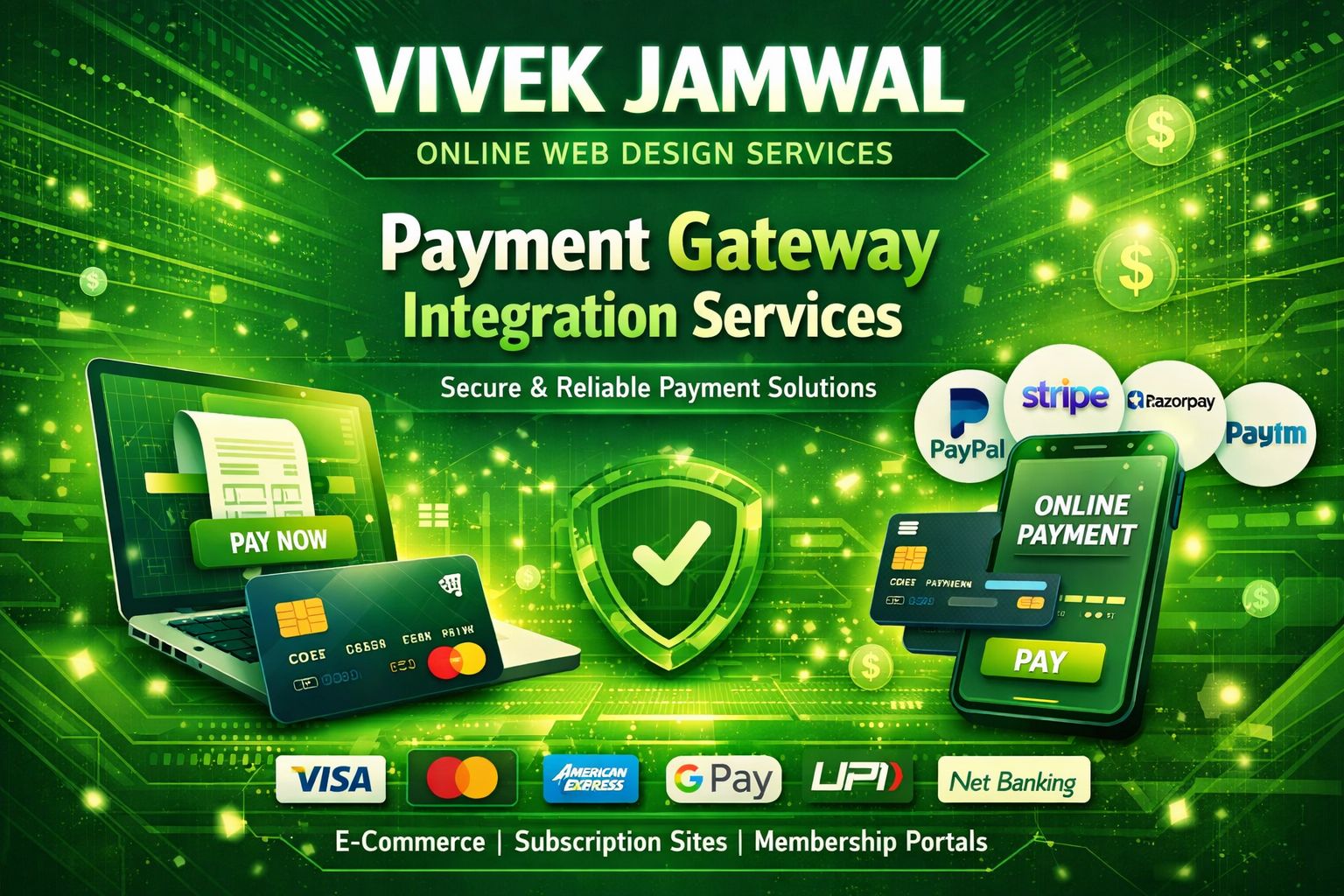
Ultimate Guide to Payment Gateway Integration Services
Payment Gateway Integration Services are the backbone of modern digital businesses. For hotel websites, homestays, travel portals, and service-based enterprises, a secure and seamless payment system is essential to build trust, increase bookings, and ensure smooth transactions. This comprehensive guide explains payment gateway integration, its benefits, types, features, and best practices for hospitality and other business websites.
Ultimate Guide to Payment Gateway Integration Services
Table of Contents
- ➤ Introduction to Payment Gateway Integration
- ➤ Why Payment Gateways Matter for Hotels & Homestays
- ➤ Types of Payment Gateway Integration
- ➤ Key Features of Modern Payment Gateways
- ➤ Supported Payment Methods
- ➤ Web & Mobile Payment Integration
- ➤ Payment Gateway Use Cases in Hospitality
- ➤ Benefits for Other Businesses
- ➤ Common Payment Integration Mistakes
- ➤ Future Trends in Digital Payments
- ➤ Conclusion
1. Introduction to Payment Gateway Integration
Payment Gateway Integration is the process of connecting a website or application to a secure payment system that processes online transactions. It enables businesses to accept payments from customers through credit cards, debit cards, UPI, net banking, digital wallets, and international payment methods. For hotels, homestays, and service providers, a reliable payment gateway ensures hassle-free booking confirmations and financial transparency.
What is a Payment Gateway?
A payment gateway acts as a bridge between customers, merchants, and banks. It securely encrypts sensitive payment data, authorizes transactions, and transfers funds to the merchant account. Modern payment gateways are designed to be fast, secure, and compliant with global financial standards.
- ➤ Secure transaction processing
- ➤ Real-time payment confirmation
- ➤ Fraud detection and prevention
2. Why Payment Gateways Matter for Hotels & Homestays
For hospitality businesses, customer convenience and trust are critical. A well-integrated payment gateway directly impacts booking rates, revenue, and guest satisfaction.
- ➤ Enables instant room bookings
- ➤ Reduces booking cancellations
- ➤ Supports advance payments and deposits
- ➤ Builds guest trust with secure payments
Guests today expect flexible and secure online payments. Without proper payment integration, hotels and homestays risk losing potential customers to competitors offering smoother checkout experiences.
3. Types of Payment Gateway Integration
Businesses can choose from different payment gateway integration models depending on their technical needs and customer preferences:
- ➤ Hosted Payment Gateway: Redirects users to the gateway’s secure page.
- ➤ API-Based Integration: Seamless in-page checkout experience.
- ➤ Mobile SDK Integration: Optimized for mobile apps.
- ➤ Multi-Gateway Integration: Supports multiple payment providers.
4. Key Features of Modern Payment Gateways
5. Supported Payment Methods
A robust payment gateway supports a wide range of payment options, ensuring convenience for all types of customers:
- ➤ Credit & Debit Cards (Visa, Mastercard, RuPay, Amex)
- ➤ UPI & Net Banking (All major Indian banks)
- ➤ Digital Wallets (Paytm, Google Pay, Apple Pay, PhonePe)
- ➤ International Payments (PayPal, Stripe, Global Cards)
- ➤ Buy Now, Pay Later (BNPL) Options
6. Web & Mobile Payment Integration
Payment gateways must work seamlessly across websites, booking engines, and mobile apps. Responsive checkout pages, fast loading times, and one-click payments significantly improve conversion rates for hotels and service-based businesses.
7. Payment Gateway Use Cases in Hospitality
- ➤ Online room reservations and instant booking confirmation
- ➤ Homestay booking deposits and advance payments
- ➤ Restaurant and room service bill payments
- ➤ Tour and activity package bookings
8. Benefits for Other Businesses
Beyond hospitality, payment gateway integration benefits eCommerce, education, healthcare, and service industries by streamlining payment workflows and improving cash flow.
9. Common Payment Integration Mistakes
- ➤ Ignoring PCI DSS security compliance
- ➤ Offering limited payment options
- ➤ Creating complex, multi-page checkout processes
- ➤ Poor mobile payment experience
10. Future Trends in Digital Payments
The future of payment gateway services includes AI-driven fraud detection, contactless payments, voice-based transactions, biometric authentication, and deeper integration with booking management systems.
11. Conclusion
Payment Gateway Integration Services are essential for hotels, homestays, and modern businesses seeking growth and customer satisfaction. A secure, flexible, and user-friendly payment system not only improves booking conversions but also builds long-term customer trust. By choosing the right integration approach and following best practices, businesses can create smooth and reliable payment experiences.
“Simple, secure payments turn visitors into customers and bookings into lasting relationships.” – Digital Payments Expert
Frequently Asked Questions
What is payment gateway integration?
Payment gateway integration is the process of connecting a website or mobile app to a secure payment processing system that authorizes and processes online transactions in real-time.
How long does payment gateway integration take?
Basic integration can take 1-3 days, while custom API integration may take 1-2 weeks depending on complexity and requirements.
Which payment gateway is best for hotels?
Popular options include Stripe, Razorpay, PayPal, and PayU. The best choice depends on your location, booking volume, and preferred payment methods.
Is payment gateway integration secure?
Yes, reputable payment gateways are PCI DSS compliant and use 256-bit SSL encryption to protect sensitive customer data.