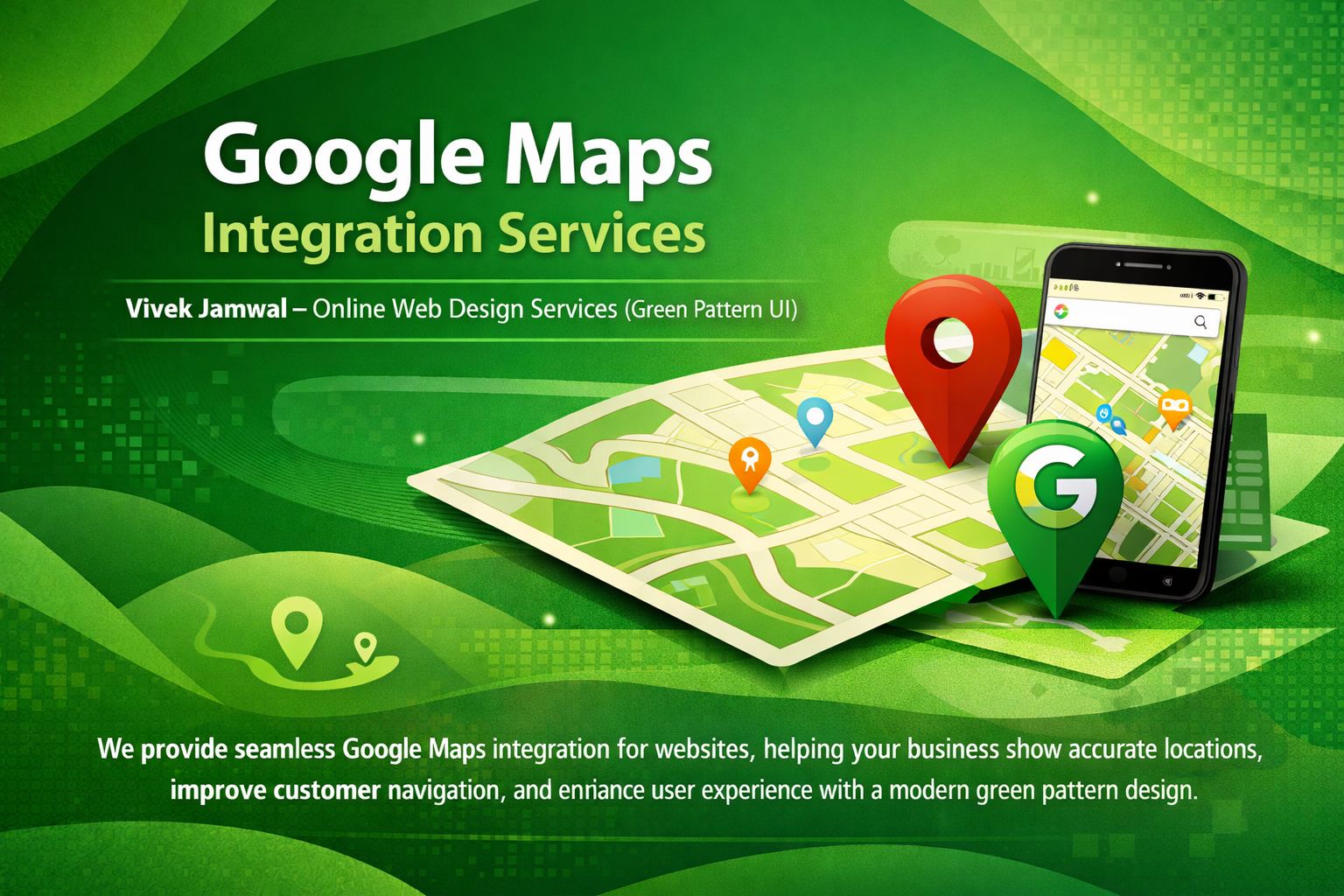
Ultimate Guide to Google Maps Integration Services
Google Maps Integration Services have become an essential component for modern websites and mobile applications. From local business visibility to advanced route planning and real-time location tracking, integrating Google Maps can significantly enhance user experience, improve engagement, and drive business growth worldwide. This comprehensive guide explores everything you need to know about Google Maps Integration Services, their benefits, features, use cases, and best practices.
Ultimate Guide to Google Maps Integration Services
Table of Contents
- ➤ Introduction to Google Maps Integration
- ➤ Why Google Maps Integration Matters
- ➤ Types of Google Maps Integration Services
- ➤ Key Features of Google Maps API
- ➤ Business Use Cases
- ➤ Web & Mobile App Integration
- ➤ Best Practices for Integration
- ➤ SEO & Local Search Benefits
- ➤ Common Mistakes to Avoid
- ➤ Future Trends in Google Maps Services
- ➤ Conclusion
1. Introduction to Google Maps Integration
Google Maps Integration refers to embedding Google Maps features into websites or applications using Google Maps APIs. These services allow developers and businesses to display interactive maps, locations, directions, distance calculations, and real-time traffic data. With billions of users relying on Google Maps daily, integration helps businesses connect users with accurate, location-based information instantly.
What is Google Maps API?
Google Maps API is a set of powerful tools provided by Google that enables developers to integrate mapping capabilities into digital platforms. These APIs include:
- ➤ Maps JavaScript API
- ➤ Places API
- ➤ Directions API
- ➤ Geocoding API
- ➤ Distance Matrix API
2. Why Google Maps Integration Matters
In today’s digital-first world, users expect location-based accuracy and convenience. Google Maps Integration Services help businesses meet these expectations by offering:
- ➤ Enhanced user navigation
- ➤ Increased trust and credibility
- ➤ Improved customer engagement
- ➤ Higher conversion rates
For local businesses, Google Maps integration is especially critical. It allows customers to easily find business locations, view operating hours, read reviews, and get directions, all within seconds.
3. Types of Google Maps Integration Services
Google Maps offers a wide range of integration services tailored to different business needs:
- ➤ Map Embedding: Display interactive maps on web pages.
- ➤ Route & Navigation: Turn-by-turn directions for users.
- ➤ Location Tracking: Real-time tracking for logistics and delivery.
- ➤ Store Locator: Find nearby branches or outlets.
- ➤ Geolocation Services: Detect user location automatically.
4. Key Features of Google Maps API
5. Business Use Cases for Google Maps Integration
Google Maps Integration Services are widely used across industries:
- ➤ Real estate property mapping and virtual tours
- ➤ Food delivery and logistics platforms with real-time tracking
- ➤ Ride-sharing applications for driver and passenger location
- ➤ Travel and tourism websites with route planning
- ➤ Healthcare and emergency services for rapid response
6. Web & Mobile App Integration
Google Maps can be seamlessly integrated into both web and mobile applications. Whether using Android, iOS, or cross-platform frameworks, Google Maps APIs ensure consistent performance and user experience. Responsive maps adapt perfectly across devices, enhancing usability and accessibility for all users.
7. Best Practices for Google Maps Integration
- ➤ Use optimized API calls to reduce costs and improve performance
- ➤ Enable lazy loading for faster page load times
- ➤ Secure API keys properly using restrictions and environment variables
- ➤ Customize maps to match your brand colors and style
8. SEO & Local Search Benefits
Google Maps Integration plays a crucial role in local SEO. Embedding maps and location data improves local visibility, enhances Google Business Profile engagement, and increases chances of appearing in the local 3-pack. Accurate location signals also help search engines trust your business data, leading to higher rankings for location-based searches.
9. Common Mistakes to Avoid
- ➤ Exposing API keys publicly in client-side code
- ➤ Overloading maps with unnecessary markers causing clutter
- ➤ Ignoring mobile optimization and touch interactions
- ➤ Not updating location data when business details change
10. Future Trends in Google Maps Services
The future of Google Maps Integration includes AI-powered insights, augmented reality navigation, indoor mapping for large venues, and deeper personalization based on user behavior. Businesses that adopt these innovations early will gain a competitive advantage in user engagement and operational efficiency.
11. Conclusion
Google Maps Integration Services are no longer optional—they are a necessity for businesses aiming to deliver location-driven experiences. From improving navigation and customer trust to boosting SEO and conversions, Google Maps integration offers immense value. By following best practices and leveraging advanced features, businesses can create smarter, more engaging digital experiences for users worldwide.
“Maps are not just about places—they are about experiences, connections, and smarter decisions.” – Industry Expert
Frequently Asked Questions
What is Google Maps integration?
Google Maps integration is the process of embedding Google Maps features like interactive maps, location search, directions, and real-time traffic into websites or mobile applications using Google Maps APIs.
How much does Google Maps API cost?
Google offers a $200 monthly credit for Maps API usage, which covers most small to medium businesses. Beyond that, pricing is pay-as-you-go based on API requests.
Can I customize Google Maps on my website?
Yes, Google Maps API allows extensive customization including map styles, colors, markers, info windows, and custom controls to match your brand identity.
How does Google Maps help with local SEO?
Embedding Google Maps on your website provides location signals to search engines, improves local search rankings, and helps customers find your physical business location easily.
Is Google Maps integration mobile-friendly?
Yes, Google Maps APIs are fully responsive and work seamlessly on all devices including smartphones, tablets, and desktops with touch-friendly interactions.